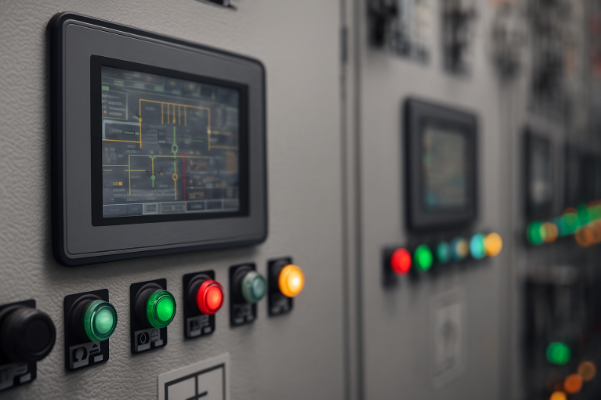
Electrical utilities across Canada and beyond are modernizing their grid infrastructure, driven by the need for higher reliability, faster response times, and smarter operational decision-making. One of the most transformative advancements in this journey is the evolution of Substation SCADA HMI systems. What once began as simple control panels has now developed into sophisticated, data-rich platforms capable of powering advanced automation, real-time monitoring, and grid-wide intelligence.
This blog explores how Substation SCADA and HMI technologies have advanced over the years and why modern utilities rely on them for efficient, safe, and connected substations.
From Manual Controls to Early SCADA Systems
In the early decades of electrical distribution, substations were monitored and controlled manually. Operators relied on analogue gauges, physical switches, and on-site inspections to ensure equipment health and system performance.
Early Challenges Included:
- Delayed fault detection
- High operational costs due to manual oversight
- Increased safety risks for field technicians
- Limited visibility into remote substations
As electrical networks grew, these limitations became unsustainable. This led to the introduction of the first SCADA systems, basic computer-based technologies that enabled remote data collection and supervisory control.
The Rise of Digital Substation SCADA
The first generation of SCADA systems centralized status monitoring and alarm notifications. This marked a significant step toward automation, allowing utilities to reduce downtime and respond faster to grid disturbances.
Key Improvements Included:
- Remote status monitoring
- Event logging
- Basic automation of switching operations
- Reduction in field labour
- Centralized visibility across multiple substations
However, as electrical systems became more complex, operators needed more intuitive and data-driven tools. This is where the evolution of Substation SCADA HMI took centre stage.
Evolution of HMI in Substation SCADA Systems
Originally, HMI (Human-Machine Interface) screens were simple, text-based displays providing limited insights. Over time, they transformed dramatically with advancements in graphics, data processing, and user experience.
Today’s Substation SCADA HMI offers:
- Real-time data visualisation
- Graphical one-line diagrams
- Interactive dashboards
- Drill-down views for equipment health
- Advanced alarming and event management
- Intuitive touchscreen interfaces
This evolution not only improved usability but revolutionised how operators interact with complex electrical systems.
Modern Substation Automation Systems (SAS)
Substation Automation Systems (SAS) go beyond monitoring—they automate protection, control, measurement, and communication functions within substations.
H3: Core Benefits of SAS Include:
- Real-time monitoring: Instant visibility into voltage, current, load, and equipment status
- Remote control: Reduced need for onsite intervention
- Fault detection & isolation: Faster outage response to minimize downtime
- Improved safety: Fewer manual operations in high-risk environments
- Higher system reliability: Consistent, accurate performance
With SAS, utilities can operate multiple substations more efficiently while maintaining high standards of security and performance.
Substation SCADA Programming: Smarter, Faster, More Reliable
Modern SCADA programming enhances how utilities gather and interpret substation data. It enables:
- Automated switching and load balancing
- Fault alarms with root-cause indicators
- Real-time data acquisition from IEDs, sensors, and controllers
- Integration with energy management systems
SCADA programming also reduces operational errors and empowers operators with actionable insights.
Advancements in Substation HMI Programming
Today’s Substation SCADA HMI systems focus heavily on user experience and intelligent visualisation. Effective HMI programming transforms raw data into meaningful, easy-to-interpret displays.
Modern HMI Features Include:
- Customizable dashboards
- Dynamic trend charts
- Clear colour-coded alarm notifications
- Real-time equipment status diagrams
- Intuitive navigation and control menus
These features ensure operators can diagnose issues quickly and maintain uninterrupted power delivery.
Substation Gateway Solutions: The Connectivity Backbone
A modern substation depends on seamless communication between all devices, PLCs, IEDs, relays, sensors, meters, and SCADA servers. This is made possible through a robust substation gateway.
Benefits of Advanced Gateway Solutions:
- Seamless multi-device communication
- Secure protocol conversion (Modbus, DNP3, IEC 61850, etc.)
- Real-time data exchange across systems
- Increased interoperability between legacy and modern equipment
- Centralised visibility for operators
Well-programmed gateway systems ensure a smooth flow of information across the smart grid.
Why Smooth Connectivity Matters
When connectivity is optimized, utilities enjoy:
- Reduced downtime
- Faster incident response
- Continuous data collection
- Better predictive maintenance
- Higher operational efficiency
A connected substation is a smarter, safer, and more resilient substation.
The Role of ControlSoft Canada
As utilities adopt smarter technologies, expertise becomes essential. ControlSoft Canada supports this evolution with advanced SCADA programming, HMI development, substation gateway configuration, and automation solutions tailored for modern electrical networks.
Conclusion
The journey from basic manual controls to intelligent Substation SCADA HMI platforms marks one of the biggest transformations in electrical grid operations. Today’s smart automation systems empower utilities with real-time insights, enhanced reliability, stronger connectivity, and faster decision-making.
As the energy landscape continues to evolve, investing in advanced SCADA, HMI, and gateway technologies becomes essential for building resilient, future-ready substations.